
Exploring the Universe Through Astroparticle Physics
Astroparticle physics represents an exciting intersection of particle physics and astrophysics, focusing on the most extreme processes in the universe. At FORTE, we bridge experimental and theoretical insights into cosmic rays, gamma rays, and neutrinos to uncover the nature of extreme astrophysical accelerators.
.jpeg)
.jpeg)
Capturing
Signals from the High-Energy Universe
We explore the cosmos through its most energetic messengers: cosmic rays, gamma rays, and neutrinos. Our work spans the entire spectrum, from the development of advanced detectors to complex data analysis and fundamental theoretical modelling.

Understanding messengers of the most violent processes in the cosmos.

Developing innovative detection techniques and software.

Developing and testing technologies for future cutting-edge observatories.
Key DAtes in Astroparticle Physics
Explore significant milestones in astroparticle physics that have shaped our understanding of the universe. This timeline highlights both general breakthroughs and those specifically connected to FORTE.
Observing the Universe
From next-generation telescope development to testing electronics modules for the Auger Surface detector.
Our laboratories
Joint Laboratory of Optics (JLO)
Researchers at JLO focus on fundamental and applied research on the areas of quantum and nonlinear optics, wave optics and physics of surfaces and layers. JLO collaborates with major international labs and designs optical and optoelectronic devices for research and industry. They contribute to FORTE in the development of next generation of telescopes.
Laboratory for Astroparticle Physics
Laboratory offers environmental stress screening for testing of the new electronics modules for the Auger Surface detector. It provides a dark room for testing photomultipliers, SiPMs and other components, used by astroparticle experiments such as CTA, SWGO. Its control room enables remote operation of the Fluorescence Detector in Argentina.
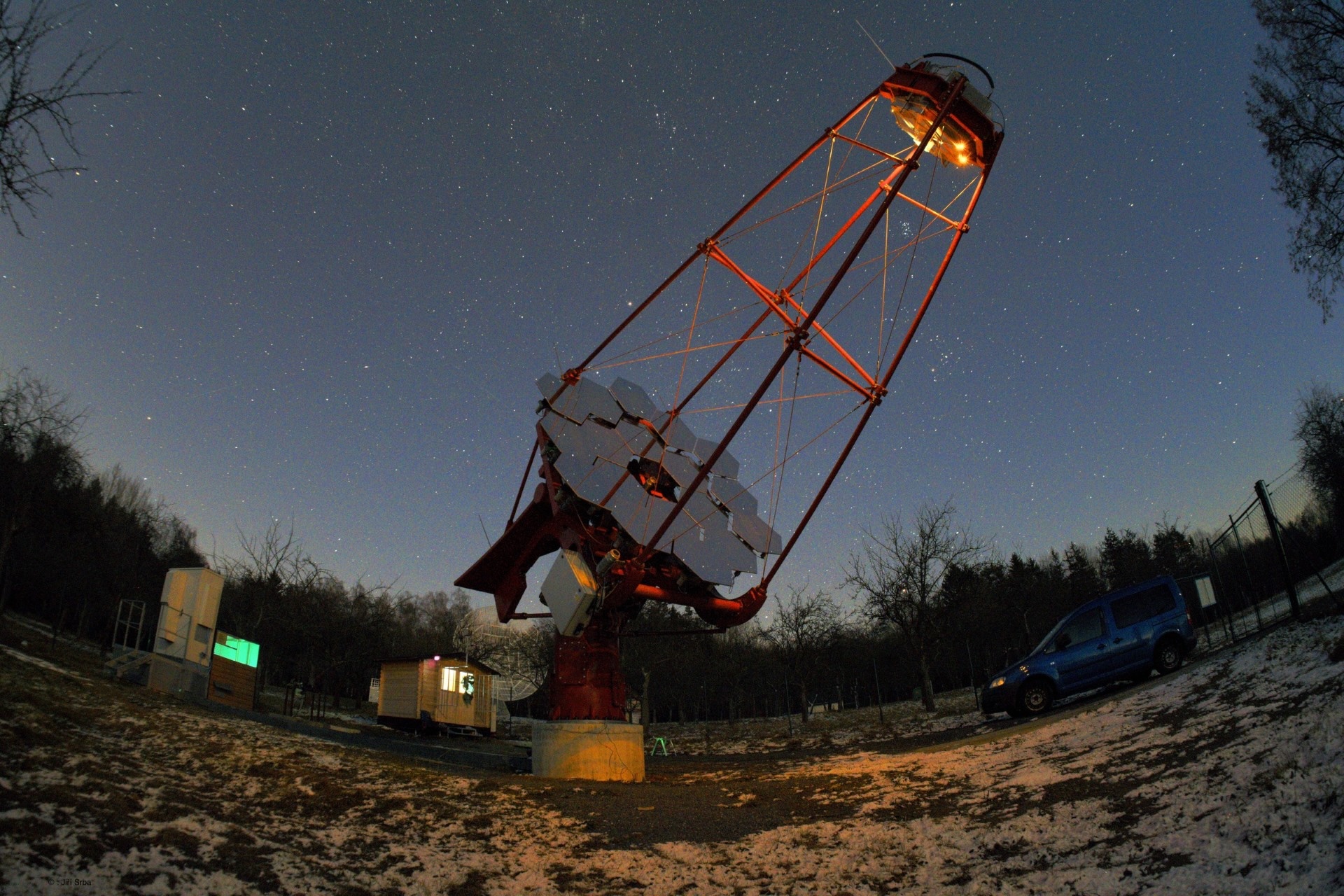
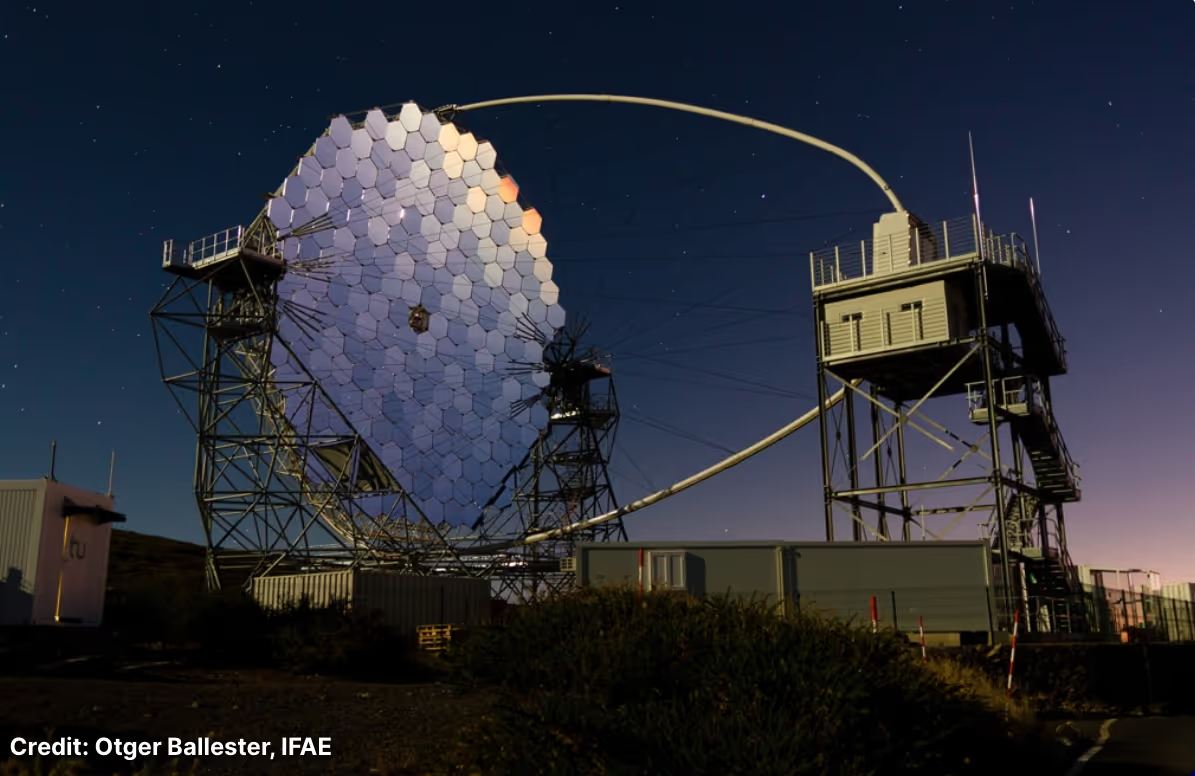
Observatories and Telescopes
.jpeg)
.jpg)
.jpeg)
.jpeg)
Astroparticle Physics: Key Statistics and Achievements
At FORTE, our astroparticle physics research has led to groundbreaking discoveries and significant contributions to the field. Our collaborative efforts have resulted in numerous published papers that push the boundaries of our understanding.
particle energies
Auger surface detectors
FORTE researchers
Large collaborations
.jpg)
Upgraded telescope prototypes installed in step towards cheaper, scalable cosmic particle observatories
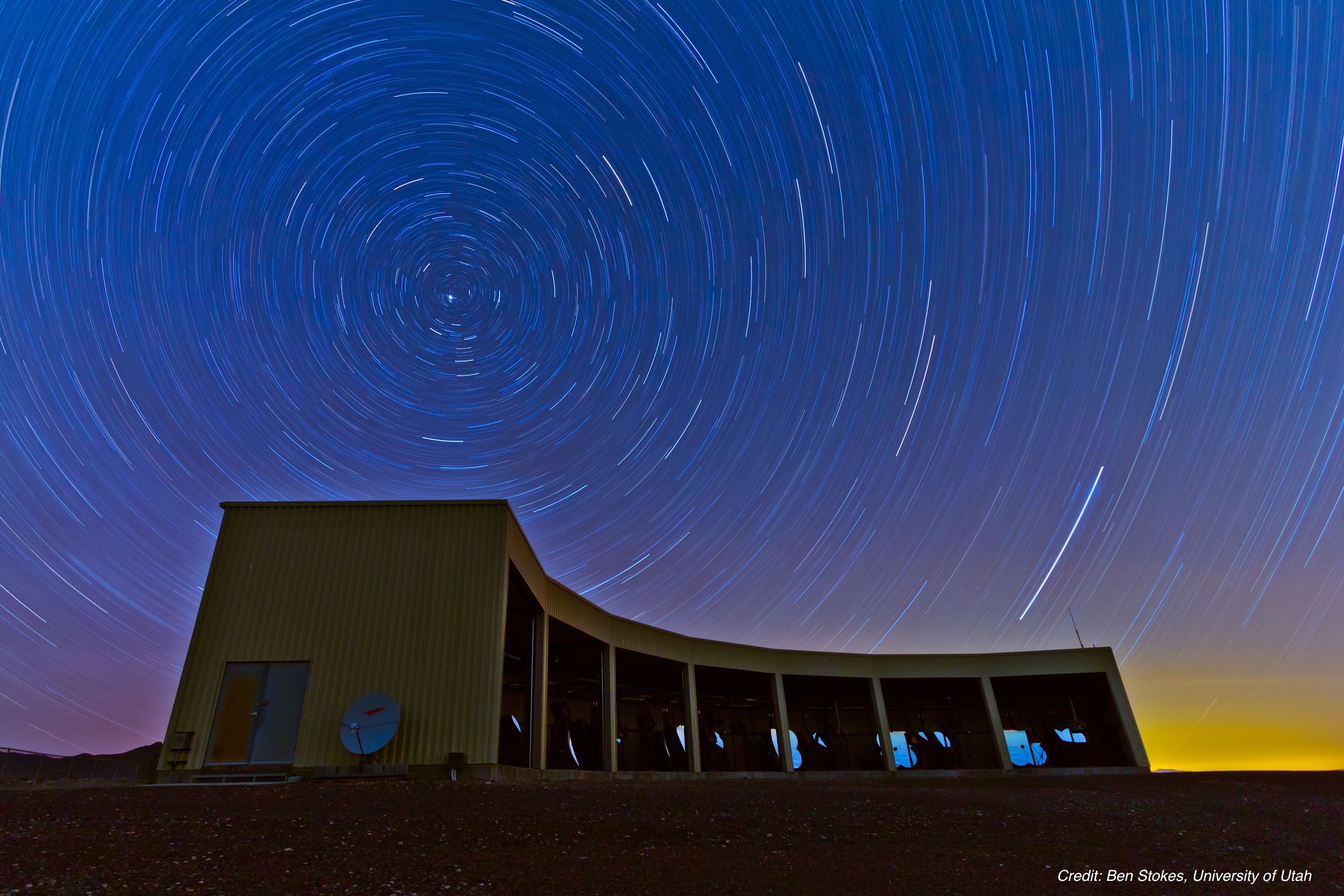
FORTE researchers from the FZU/PU Joint Laboratory of Optics installed two upgraded fluorescence telescope prototypes at the Pierre Auger Observatory in March, carrying out calibration and testing as part of a wider effort to develop a new, lower-cost approach to observing the universe’s rarest high-energy particles.
The next stage of the work will focus on analysing the collected data and preparing for stereo observations, where overlapping fields of view are used to reconstruct atmospheric particle showers with greater precision. If successful, the approach could enable much larger and more cost-effective observatories capable of probing the highest-energy particles in the universe.
The installation is part of the Fluorescence detector Array of Single-pixel Telescopes (FAST) project, an international collaboration involving researchers from the Joint Laboratory of Optics and partners in Japan, Germany and Italy. The project is focused on designing a simplified telescope system that can be produced at lower cost and deployed in large numbers to cover far greater areas of sky than current facilities.
The need for such an approach stems from the extreme rarity of ultra-high-energy cosmic particles. A particle with an energy of 10¹⁹ eV is expected to hit an area of one square kilometre roughly once per year, while a particle with 10²⁰ eV arrives only once per century. Even the Pierre Auger Observatory in Pierre Auger Observatory, which spans 3,000 square kilometres, is not large enough to collect sufficient high-statistics data at the highest energies.
.jpeg)
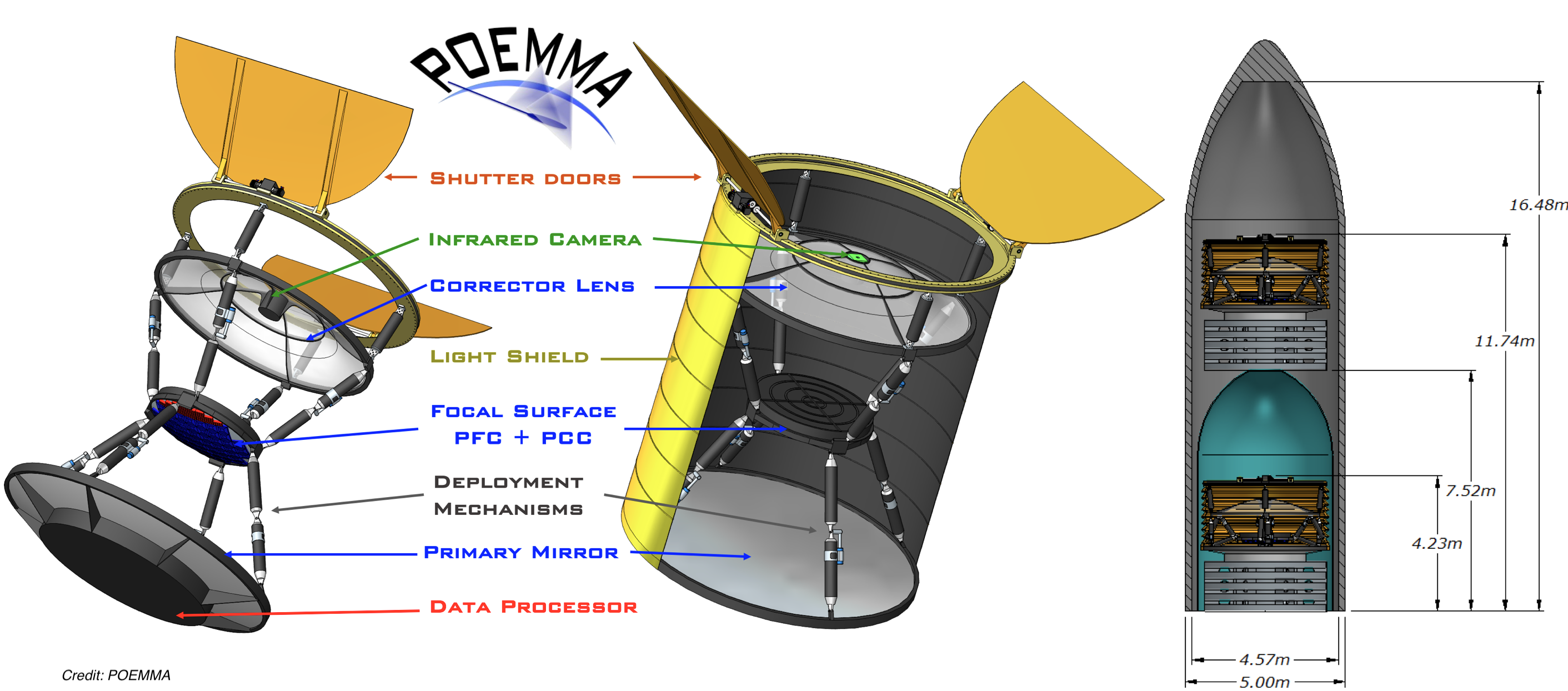
FAST addresses this limitation by redesigning the telescope itself, prioritising scalability and reduced production cost. The system is based on a simplified optical and electronic architecture intended to make large arrays feasible over vast distances.
Several technical changes underpin this approach. Earlier prototypes used mirrors composed of nine segments and the new design reduces this to four. A revised manufacturing process removes the need for manual polishing after thermal shaping, cutting both production time and cost. The electronics have also been redesigned into a modular system with lower noise levels, scalable from eight to 48 channels.
Each telescope prototype uses a 30° x 30° field of view, utilizes the fluorescence detection technique and is designed for autonomous operation, powered by solar panels and equipped with directional antennas for data transmission, allowing deployment in remote locations without extensive infrastructure. The modular concept extends to large-scale operation. A single “master” unit containing control and data acquisition systems can coordinate a 360-degree array of 12 telescopes, opening the way towards observatories covering tens of thousands of square kilometres.
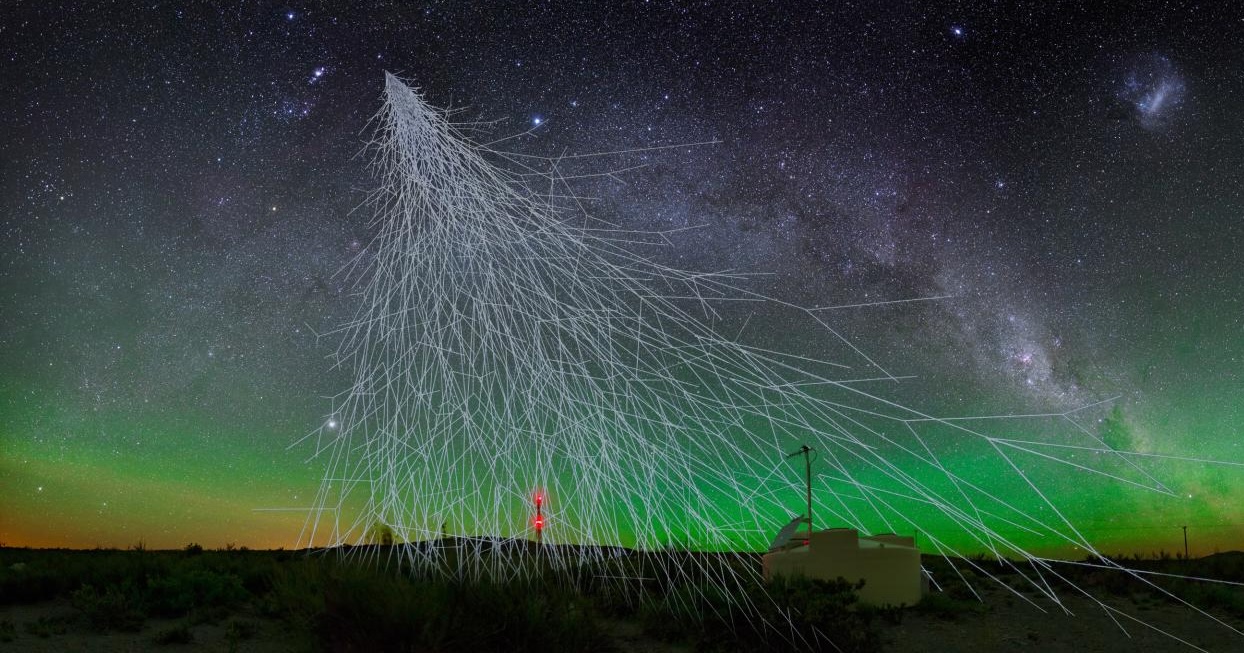
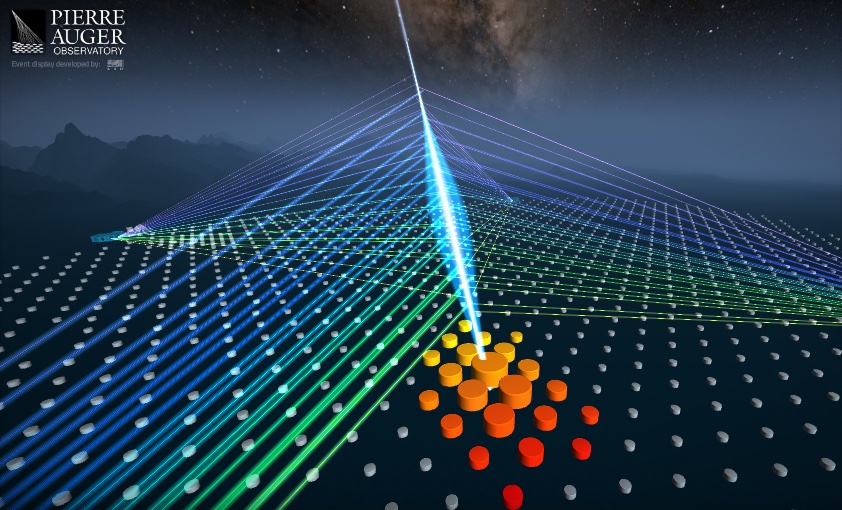
The telescopes themselves detect air showers produced when high-energy particles enter Earth’s atmosphere and collide with air molecules at altitudes of around 40 km. These cascades emit fluorescence light from excited nitrogen molecules, which can be measured to determine the energy of the original particle.
Frontier research in Astroparticle physics
Take a closer look at the ideas behind astroparticle physics.